
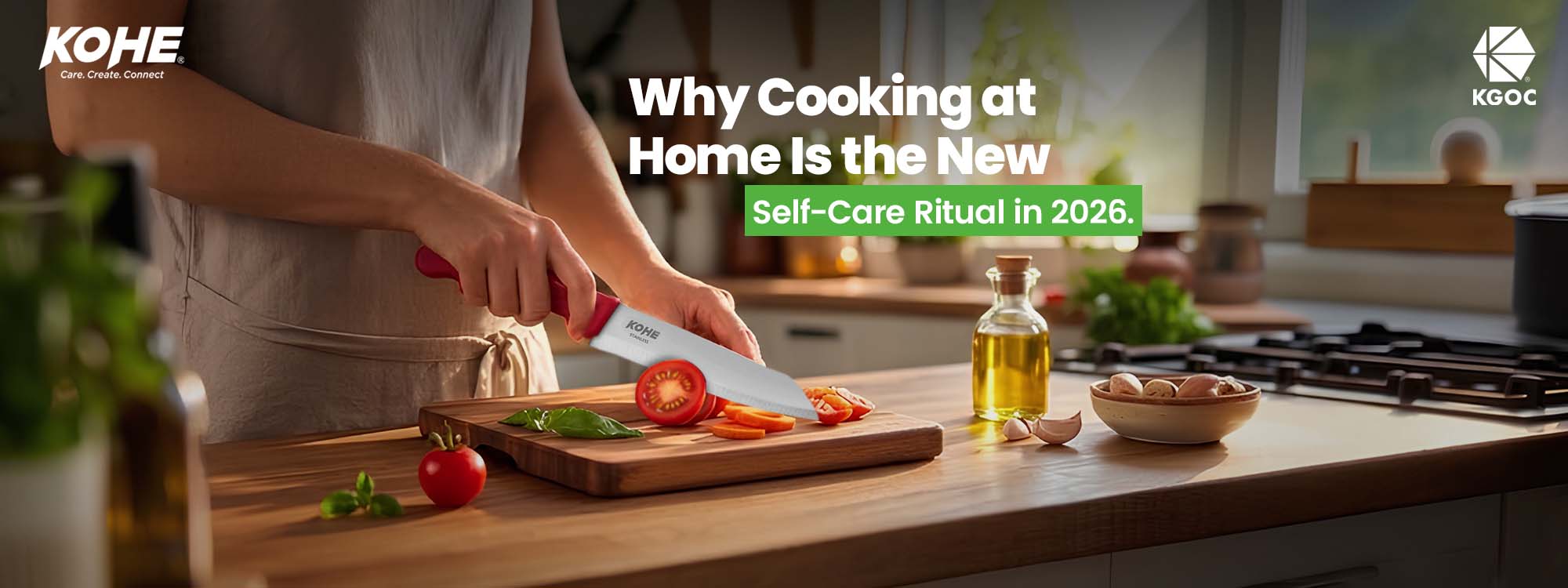
In recent years, the idea of self-care has evolved beyond spa days or weekend breaks. People are now finding balance in everyday routines, and one of the most meaningful practices gaining attention is cooking at home. Preparing meals is increasingly being seen as a calming and intentional activity that helps individuals reconnect with themselves and their surroundings.
For many households in India, cooking has always carried emotional and cultural value. Family recipes, seasonal ingredients, and shared meals have long been part of daily life. What has changed in recent years is the way people approach the kitchen. Instead of viewing it purely as a place for chores, more individuals are embracing cooking as a mindful ritual that encourages creativity, focus, and relaxation.
The process itself plays a significant role in this transformation. Washing vegetables, slicing ingredients, and assembling dishes create a rhythm that encourages people to slow down and engage fully in the present moment. Tools used in the kitchen contribute greatly to this experience. Among them, kitchen knives remain one of the most essential instruments, shaping how smoothly and comfortably food preparation unfolds.
Understanding why cooking at home feels therapeutic, and how tools such as kitchen knives support the process; offers insight into why the kitchen is becoming a space for everyday self-care in 2026.
The Rise of Cooking at Home as a Self-Care Practice
Self-care today often focuses on activities that promote calmness and personal well-being. Cooking fits naturally into this category because it combines creativity, physical engagement, and nourishment.
When individuals cook their own meals, they become more aware of ingredients, textures, and flavors. This awareness encourages mindfulness, which is a key element of many wellness practices.
Cooking at home also helps people step away from digital distractions. Instead of scrolling through screens, attention shifts toward preparing food, experimenting with recipes, and creating meals from scratch.
Some reasons cooking has become a self-care ritual include:
These simple yet meaningful actions help transform daily cooking into a relaxing and rewarding experience.
The Role of Kitchen Knives in Everyday Cooking
While cooking involves many tools, kitchen knives remain at the center of food preparation. Almost every dish begins with cutting ingredients, whether it is slicing vegetables for a curry, chopping herbs for garnish, or preparing fruits for a salad.
Reliable kitchen knives make these tasks smoother and more precise. When cutting becomes effortless, the entire cooking process feels more enjoyable and less stressful.
In Indian kitchens, where fresh ingredients form the base of most meals, knives are used repeatedly throughout the cooking process. From preparing onions and tomatoes to cutting leafy vegetables and herbs, a dependable knife supports both efficiency and consistency.
Because of their frequent use, kitchen knives influence not only cooking speed but also comfort and safety in the kitchen.
Different cooking tasks require different blade shapes and sizes. Recognizing the purpose of each knife helps home cooks work more efficiently.
Chef’s Knife
The chef’s knife is widely used for general food preparation. Its longer blade allows cooks to chop vegetables, slice fruits, and handle many everyday cutting tasks.
Paring Knife
A smaller blade designed for delicate work, the paring knife is commonly used for peeling fruits, trimming vegetables, or preparing garnishes.
Utility Knife
A utility knife sits between a chef’s knife and a paring knife in size. It is suitable for tasks that require both control and a slightly longer blade.
Bread Knife
This knife features a serrated edge, making it suitable for slicing bread or foods with a firm exterior and soft interior.
Many households prefer organizing these tools as a kitchen knives set, ensuring that different cutting needs can be addressed without difficulty.
Kitchen Knives in Indian Kitchens
Cooking styles across India often involve detailed ingredient preparation. Dishes frequently begin with finely chopped onions, diced vegetables, or sliced herbs that contribute to layered flavors.
Because of this preparation style, kitchen knives in India must be versatile enough to handle a wide variety of ingredients, including:
This versatility makes a well-organized kitchen knives set particularly useful in Indian households. Having multiple knives designed for different tasks helps maintain both precision and efficiency during cooking.
How the Right Kitchen Tools Support Mindful Cooking
Mindful cooking involves focusing on each stage of food preparation. When tools are comfortable and reliable, it becomes easier to stay engaged in the process.
A balanced kitchen knife allows smoother cutting motions, reducing the effort needed during preparation. Over time, these small improvements make cooking feel less like a task and more like a relaxing routine.
Important factors that influence the experience include:
Thoughtful design is increasingly becoming a focus for kitchen tool manufacturers. Within the kohe kgoc ecosystem, kitchen products are often developed with everyday cooking habits in mind, reflecting how practical design can support both efficiency and comfort.
Caring for Kitchen Knives for Long-Term Use
Proper maintenance ensures that kitchen knives remain effective and safe to use. Simple care practices can extend the life of these tools while maintaining cutting performance.
Some essential maintenance habits include:
These small practices help keep kitchen knives ready for everyday cooking tasks.
Frequently Asked Questions
What usually comes in a kitchen knives set?
A kitchen knives set typically includes a chef’s knife, paring knife, utility knife, and sometimes a bread knife or additional specialized blades.
Why are sharp knives considered safer?
Sharp knives cut ingredients more easily and require less pressure. This reduces the chances of slipping while cutting.
Are kitchen knives in India designed differently?
Kitchen knives in India are often designed to handle diverse ingredients used in regional cooking, including vegetables, herbs, and spices that require precise preparation.
How often should kitchen knives be sharpened?
In most home kitchens, sharpening knives every few months helps maintain effective cutting performance.
Conclusion
Cooking at home continues to gain new meaning in modern lifestyles. What was once considered a routine household task is now being rediscovered as a mindful practice that encourages creativity, balance, and connection with food.
The tools used in the kitchen contribute significantly to this experience. Among them, kitchen knives remain essential for transforming ingredients into meals with ease and precision. In Indian kitchens where fresh ingredients and detailed preparation are common, dependable knives support both efficiency and comfort.
As more people embrace cooking as part of their self-care routine, thoughtfully designed tools and organized kitchen knives sets are becoming an important part of the process. Exploring practical kitchen solutions from ecosystems such as kohe kgoc can help support everyday cooking habits and make time in the kitchen more enjoyable and meaningful.

 India
India  International